
Classics in a Modern Age: Lessons from the Ancient Past
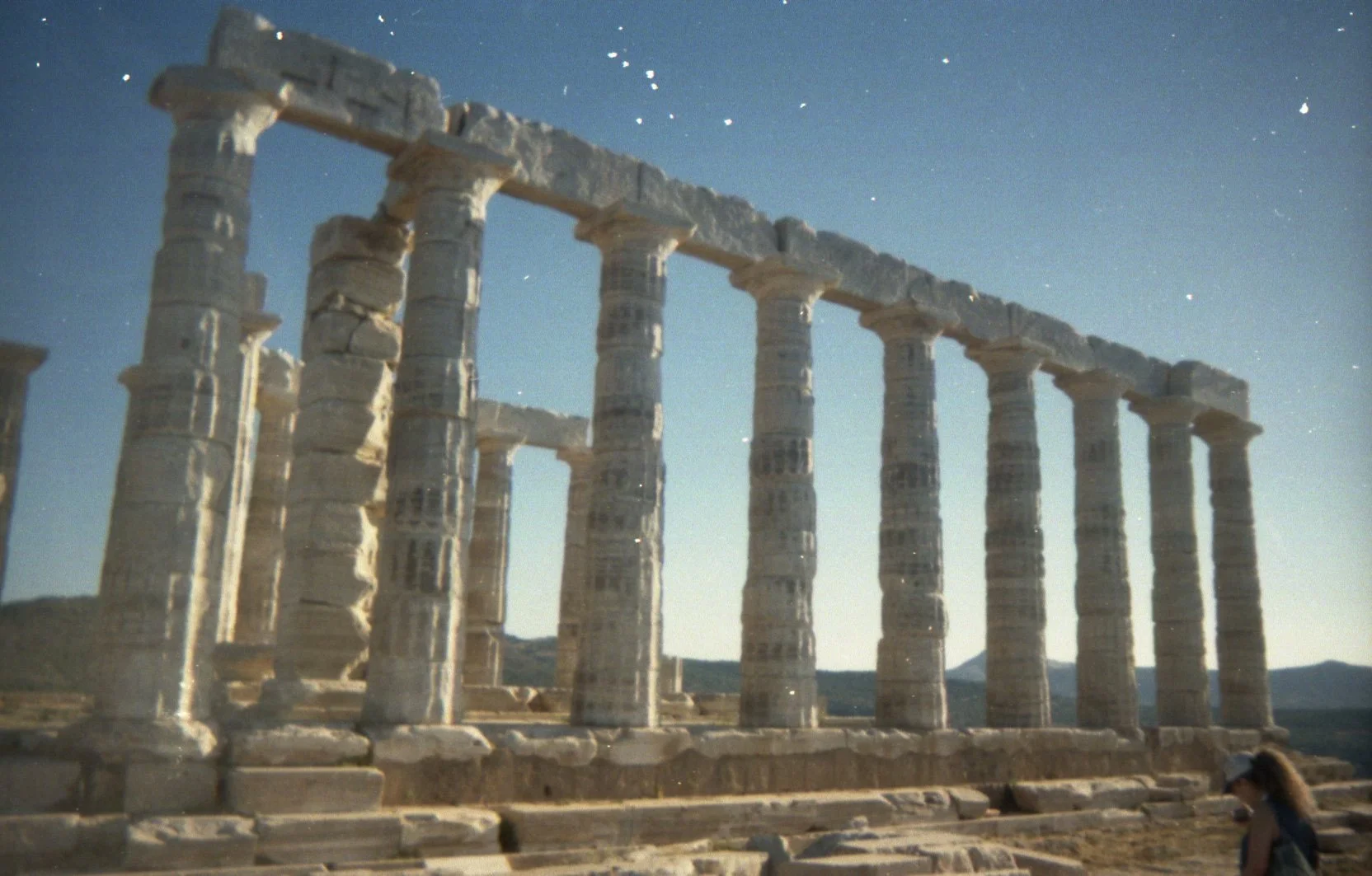
Nowadays, to tell someone you study Classics almost always guarantees a response charged with a mixture of unapologetic confusion and reluctant respect. More often than not, they do not actually know what Classics is. To some, it means “the Classics” - the literary canon and works that have survived long enough to be declared timeless ‘greats’. But, over time the word itself has become strangely ambiguous. It is a term loosely thrown around and exists in the popular imagination as aristocratic Englishmen, Plato and Aristotle, and the modern novelty that is Percy Jackson. It survives in the imitation of ancient architecture adorned on every university campus through Doric columns, friezes, and Latin inscriptions outside of churches, lingering as an enduring attempt to emulate a once idealized golden age. Yet the question still looms with predictable urgency: why would anyone spend four years devoted to studying the ancient past? The inevitable “what are you going to do with that degree?” prompts a fight-or-flight response, though the truth is that most of us do not have a definitive answer.
For all the skepticism that the degree can invite, it is often not until well into one’s studies that it truly begins to resonate. There comes a moment when your intellectual passions, which you may once have questioned long after it was too late to change course, suddenly intersect with academic discipline, and finally, the subject reveals itself in full. What Classics offers to an education will differ from person to person, yet at its core lies a comparative and interdisciplinary way of understanding the modern world. It trains you to acknowledge that few ideas emerge in isolation and that debates once presented as entirely modern are in fact rooted in far older anxieties that have manifested themselves in new ways.
Eventually, it finally dawns upon you. You reach that moment when these continuities begin to surface everywhere, and you can no longer neatly separate the political polarization, persuasive rhetoric, and democracy corruption of the present from the tensions that engulfed Athens during the Peloponnesian War. This legacy emerges in politics shaped by spectacle, in legal systems still indebted to Roman precedent, in cultural debates over identity, power, and belonging, and in the persistent struggle over who gets to control historical memory and tell the stories of the past. What once appeared distant begins to feel unexpectedly familiar. Recognizing these connections beyond the classroom endows the discipline with a new kind of clarity. What might have once seemed like the study of remote civilizations and a focus on obsolete practices has evolved into a sharper lens for interpreting the present and critically examining the value and actions that shape contemporary society.
That feeling first occurred for me when I was introduced to the so-called “Father of History”, Herodotus. His name has been reduced to two distinct labels and has long recurred throughout seminars, textbooks, and on lecture slides as either the “Father of Lies” or, through his claim to fame, as the founder of history. But it was through reading and closely analyzing Herodotus’ works, the Histories, which document the Peloponnesian War, that the significance of those titles attributed to him became evident. I was initially captivated by Herodotus’ ethnographic sensibility, by the seriousness with which he approached foreign customs, competing narratives, and the complexity of human behavior. In many ways, his work anticipates the very questions that still define how we engage with the past and what we even mean by the term ‘history’.
For Herodotus, historiai signified inquiry: an active investigation of the past rather than a fixed record. What now seems intuitive to us was, in its time, revolutionary. He sought not merely to recount events, but to uncover their aitiai - their causes, responsibilities, and underlying motives. In the opening of Book One, he states that his purpose is to preserve the fame of the remarkable achievements of both Greeks and non-Greeks so that their deeds are not forgotten. That impulse continues to shape modern historical practice: the belief that memory requires stewardship, and that the past must be examined and scrutinized rather than simply inherited.
At the same time, what makes Herodotus feel especially modern is his treatment of difference. Through his reflections on nomos (custom), he reminds us that many things that societies present as natural or self-evident are, in fact, culturally produced. By placing distinct individuals alongside one another, he exposes how every community naturally tends to regard its own ways as best. Difference, in Herodotus, is not something to be feared or resented, but something to be studied. He encourages readers to recognize that no worldview exists in isolation and that what appears obvious in one culture may seem entirely foreign in another, even as he himself presents these observations through a uniquely Greek nationalistic lens.
This becomes even more striking when considered alongside a rapidly growing digital age. We now inhabit a world saturated with competing narratives, instantaneous commentary, and information delivered faster than it can be fact-checked and verified. Herodotus, too, worked through conflicting testimonies, rumors, local traditions, and politically motivated accounts. In many ways, this is how he earned both his praise and criticism. Rather than pretending to certainty where none existed, he often signaled doubt to readers, recorded multiple versions, or noted when a claim could not be confirmed. Of course, this methodology is also where criticism of him lies: why trust an author who preserves such uncertain accounts and a lack of validity? That same intellectual honesty that Herodotus delivered to us so earnestly feels almost radical today. At a time when confidence is often mistaken for truth, Herodotus reminds us that uncertainty can itself be a rigorous practice. To say, “this is what I was told”, or “I do not fully believe this account”, is not weakness, but Herodotus’ methodological integrity peeking through.
Herodotus also speaks directly to modern anxieties about misinformation and selective memory. Governments, institutions, and media organizations continue to shape public understanding. This is achieved not through what they say, but instead through what they omit, sanitize, or choose not to remember. As narratives continue to be meticulously refined and uncomfortable truths are excluded, the cycle of misinformation deepens, revealing systemic negligence, heightened political polarization, and a lack of awareness about our past. Herodotus understood the inherent connection between power and storytelling. His choice to incorporate multiple perspectives, even if imperfectly, demonstrates a commendable understanding that no single authority should monopolize our understanding of history. However, given the myriad observations and contrasting accounts presented to us, it is ultimately our responsibility to discern what we consider to be true and credible. The greatest privilege one can possess is the ability to influence others, and few things wield that influence more powerfully than a story. Whether short or long, every narrative holds an instrumental force in constructing perception, deepening understanding, and inspiring the actions of those who inherit it. When those entrusted fail to do so, even in the public eye, and that authority is exercised without honesty and transparency, it becomes far easier for governments, institutions, corporations, and powerful leaders to manipulate and obscure what is accepted as truth.
Nonetheless, Herodotus was no flawless authority. He is frequently scrutinized for exaggeration, hearsay, and factual uncertainty. Such criticism often neglects the conditions under which he was writing. Herodotus had no established historiographical model before him, nobody to base his method on, and no disciplinary rulebook determining what was necessarily right or wrong in 430 BCE. He was inventing a method as he used it, discovering what worked and what did not, all while going through the motions. Plutarch even later accused him of malice and of being philobarbaros, a lover of foreigners, revealing just how subjective judgments about neutrality have always been. Regardless of whether one thinks Herodotus was entirely neutral, by ancient Greek standards, he was only doing what was known to him.
Perhaps most importantly, Herodotus teaches that history is not a static or distant body of facts. It has always been, and always will be, an interpretive practice requiring critical observation, discernment, and curiosity. Readers must weigh evidence, identify prejudice, notice silences and absences, and ask who benefits from a particular version of events. Those are not merely classical concerns of Herodotus. Even in modern society, this reality feels familiar. Whether confronting propaganda, algorithm-driven media, partisan distortions, AI-generated content, or romanticized and embedded national myths, the burden remains the same: to think critically rather than passively consume and accept information outright. Even then, uncertainty still lingers. That instinct is only natural in a society that continuously feeds us unreliable narration and misinformation. We now exist on a spectrum: some meet the information they receive with unease and skepticism, while others, perhaps more alarmingly, have grown complicit in passively accepting falsehoods. It is easy to consume information uncritically and accept mass media at face value, but it is now even easier to believe misinformation and retreat to ideological echo chambers that reinforce our existing beliefs while discouraging us from confronting their shortcomings.
One of the most striking ways Herodotus speaks to the present is in the context of fake news. We live in an era where narratives can be manufactured, circulated, and believed at extraordinary speed, corrupted by political polarization and by every side feeling they alone are ‘right’. That almost feels reminiscent of Herodotus’ observation that each culture deems itself the ‘best’. Defined by culturally constructed belief systems, each culture, political faction, and ideological group has come to treat its own version of correctness as self-evident, grounded in its particular morals and inherited expectations. Social media has intensified this reality by erasing the distance between source and audience, allowing speculation and rumours to spread with the same authority once given to verified evidence. Falsehoods are repeated until they scarily assume the texture of truth, while emotionally charged claims often travel faster than careful analysis ever can. In this tumultuous environment, the challenge is no longer access to information but deciding with what deserves to be trusted and how that information is then used to educate ourselves and others for the greater good.
Herodotus confronted a remarkably similar problem, albeit through different means. He worked in a world dictated by oral testimony, political self-interest, regional bias, and stories altered through repetition. Rather than presenting every account as unquestionable fact, he frequently distinguishes between what he has seen, what he has been told, and what he personally finds credible. He records competing versions of events, acknowledges uncertainty, and occasionally withholds judgment altogether. That habit of intellectual transparency feels especially valuable now. Where modern discourse often rewards certainty, speed, and sporadic outrage, Herodotus models patience, scrutiny, and the willingness to admit ambiguity.
In that sense, reading Herodotus becomes an intense exercise in media literacy. He teaches readers to ask basic but essential questions: Who is telling this story? What interests do they serve? What evidence supports it? Why has this version prevailed over another throughout antiquity? With society’s booming dependence on AI, many of us have become complicit in accepting everything we read, hear, or see as true. Whatever is given to us, we readily consume, and when someone challenges it, we are quick to dismiss them and jump into an antagonistic defense. Moreover, if fake news depends on passive consumption, then Herodotus refreshingly offers the direct opposite habit: active inquiry.
This is ultimately why the study of Classics can feel unexpectedly urgent in an era where it is constantly dismissed as fruitless. The familiar interrogation round follows: what exactly will you do with proficiency in Latin and Ancient Greek? What value does that degree have? It may not be the most marketable degree, and maybe some of us Classics majors will never be able to convert our years of Latin into a six-figure New York salary, though that pertinent question has never been the point. We study Classics not merely to encounter distant empires, archaeological remains, marble statues, or languages removed from modern life. It is an encounter with enduring human problems that have never truly disappeared and have only become more prominent. Through the ancient world we are better equipped to expose the living contradictions in our own age, all while remaining anchored in themes of identity, loss, memory, custom, and heritage that continue to shape society.
The ancient past becomes a mirror for learning about the modern world. Perhaps that is why studying Classics eventually hits with such a sudden force. For me, immersed in modern media and politics, it often felt as though Herodotus could step directly into the troubling realities of the modern day, as we grapple with ever-changing political and social anxieties. You reach a moment where being able to cite an entire Ciceronian speech, quote lines from Aristophanes, or recall one of history’s earliest intellectual rivalries between Thucydides and Herodotus ironically feels secondary. The study is not about memorizing ancient empires’ territories on a map or tracing the chronology of Roman emperors and long-conquered city-states; these are just the frameworks through which we examine fundamental questions about conquest, justice, power, and cultural identity, all while becoming more grounded in the world we inhabit. Thus, Herodotus shows us that the struggle over truth, cultural perspective, and responsible inquiry did not begin with us, nor will it end with us. What changes are the technologies, the institutions, and the scale at which crucial narratives circulate. However, what remains constant is the necessity of critical discernment, as the truth will always be contested. Each generation inherits competing narratives and willingly chooses what parts of the past are worth preserving. Furthermore, Herodotus reminds us that the human impulse to embellish, distort, and manufacture the truth has always existed, but what has evolved is the medium through which these stories travel and are presented. Whether through museums, newspapers, social media, or books, these institutions exercise influence over our collective memory, informing what we know and deciding which stories are told, whose voices are heard, and what ultimately comes to be accepted as history. To read Herodotus today is not to escape into the ancient world, but to return to our own with clearer perspectives, sharper instincts, and a crystallized understanding of the inherent fragility of truth.
Nicolle Riley is from Los Angeles and is a 3rd-year student studying Classics, Ancient History, and Archaeology through Trinity College’s Dual Degree program with Columbia University. She is passionate about ancient historiography and the power of storytelling.
Photo credit: Parthenon, Nicolle Riley